TPMS Mandate (UN ECER141) FOR COMMERCIAL VEHICLES
Since July 2022, the requirement for a Tyre Pressure Monitoring System (TPMS) has applied to all newly type-approved vehicles in categories M2, M3, N1 to N3, as well as O3 and O4. Since July 2024, the regulation has come into full effect: since then, all newly registered trucks, vans, buses, and trailers must be equipped with a TPMS.
Passenger Transport
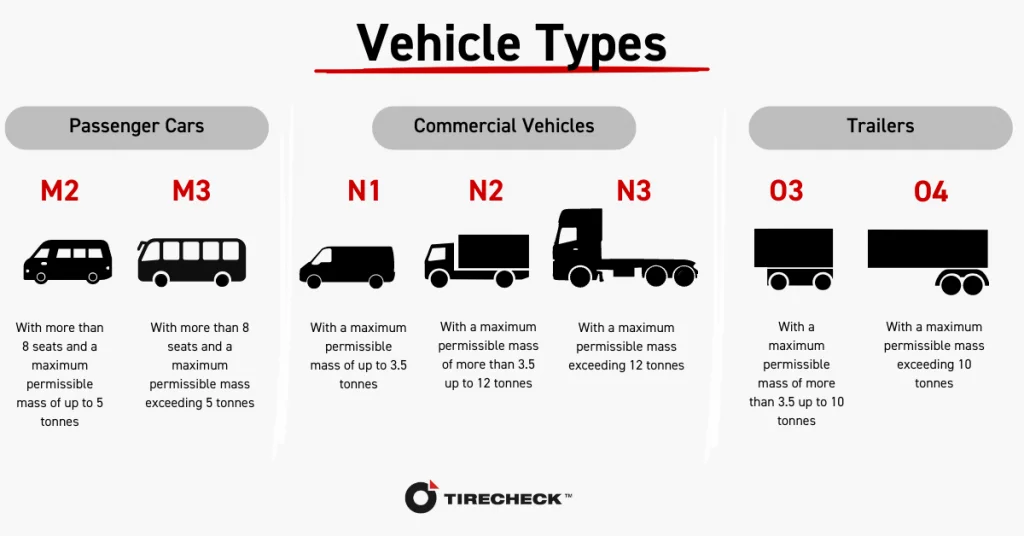
M2: With more than 8 seats and a maximum permissible mass of up to 5 tonnes
M3: With more than 8 seats and a maximum permissible mass of more than 5 tonnes
Goods Transport
N1: With a maximum permissible mass of up to 3.5 tonnes
N2: With a maximum permissible mass of more than 3.5 to 12 tonnes
N3: With a maximum permissible mass of more than 12 tonnes
Trailers
O3: With a maximum permissible mass of more than 3.5 to 10 tonnes
O4: With a maximum permissible mass of more than 10 tonnes
THE ADVANTAGES OF TPMS FOR COMMERCIAL VEHICLES

Maximum safety ensured through immediate warning in case of pressure loss.

Reduction of CO2 emissions through fuel efficiency.

Improved fuel efficiency through optimized tire pressure.

Reduction of downtime and operating costs.
In this Article:
Share This Article:
IMPORTANT FAQs
What are the benefits of a TPMS for commercial vehicles?
A Tyre Pressure Monitoring System (TPMS) enhances driving safety, improves fuel efficiency, extends tyre lifespan, reduces CO2 emissions, and lowers your operating costs. Additionally, downtime is minimized through early problem detection.
Which truck and trailer classes exactly fall under the TPMS mandate according to UN ECE R141?
- M2 und M3: Vehicles for passenger transport with more than eight seats in addition to the driver’s seat
- N1 bis N3: Vehicles for freight transport
- O3 und O4: Trailer
What are the consequences if a vehicle in the affected category is not equipped with a TPMS?
Can tire pressure monitoring systems (TPMS) be retrofitted in commercial vehicles?
Do existing vehicles over 3.5 tonnes have to be mandatorily retrofitted with TPMS, or does grandfathering apply?
No, there is no legal requirement to retrofit. Grandfathering protection applies to trucks, buses, and trailers that are already registered.
Legal situation: The requirement under UN ECE R141 (EU GSR II) applies exclusively to the placing of new vehicles on the market (type approvals from July 6, 2022; first registrations from July 7, 2024). Even in the event of a change of ownership or resale, TPMS retrofitting is not required.
Voluntary retrofitting: In practice, many fleet operators voluntarily retrofit existing vehicles in order to:
Reduce tire blowouts, downtime, and fuel costs,
Uniformly monitor telematics data across the entire fleet,
Ensure a seamless combination of new tractor units (equipped with TPMS) and older trailers.
How is the driver informed about the tire pressure?
The driver is informed through a warning signal on the dashboard. In modern systems of the tractor unit, the exact position of the affected tire and the current pressure can be displayed.
Furthermore, there is the option to view additional technical details via a built-in display. Additionally, precise wheel positions and detailed information are accessible at any time through the TireCheck INFLEET App.